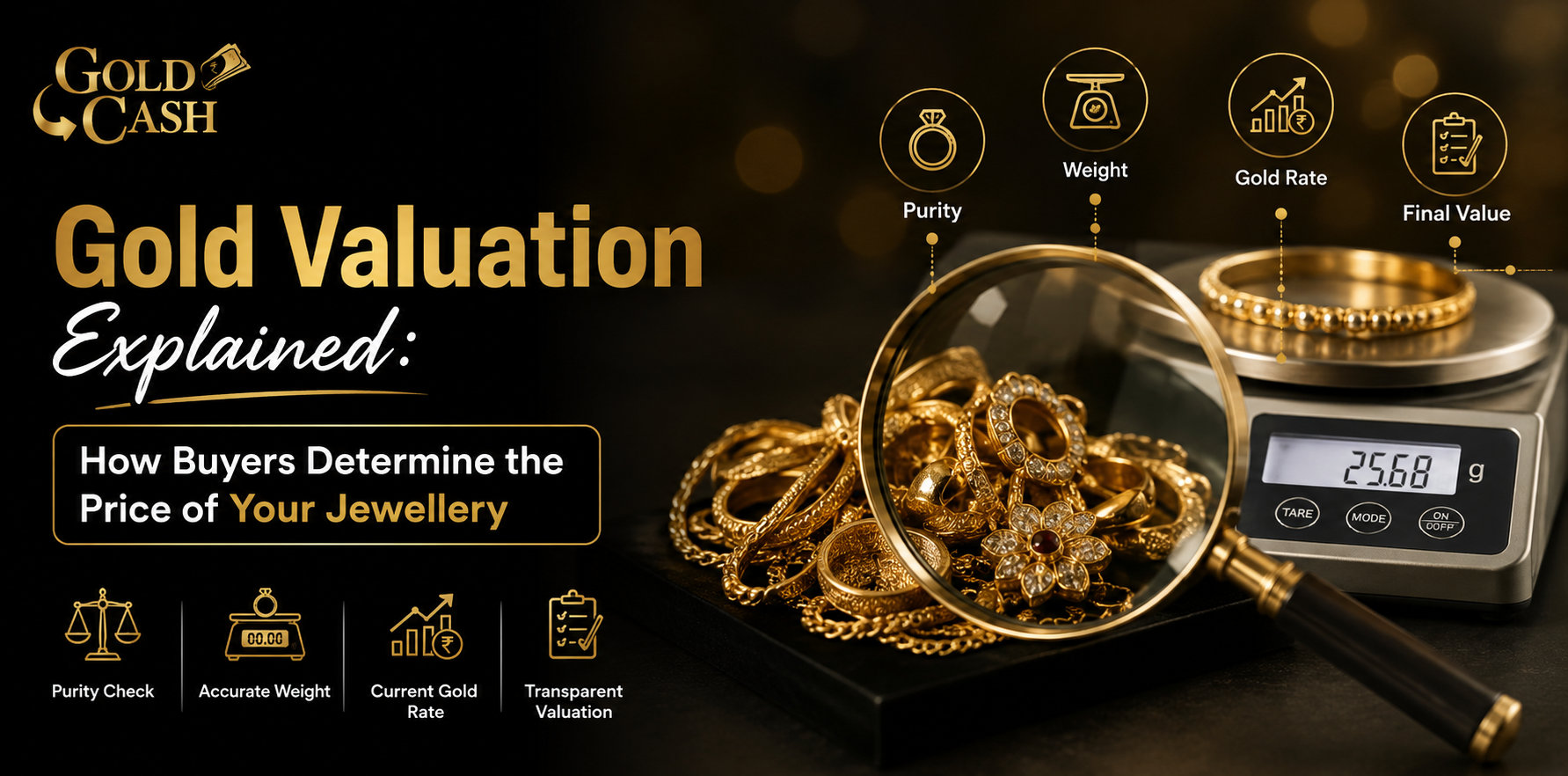
Gold Valuation Explained: How Gold Jewellery Is Priced
4 September 2026
Author: GoldCash
Gold Valuation Explained: How Buyers Determine the Price of Your Jewellery
Selling old or unwanted gold jewellery can seem straightforward until you receive a valuation that is different from what you expected. Many people wonder how gold buyers decide what their jewellery is worth and why the final amount may not simply equal the current market price of gold.
The answer lies in several factors, including gold purity, weight, the current gold rate, and the amount of pure gold present in the item.
Understanding how gold valuation works can help you make a more informed decision and recognize what to look for when choosing a gold buyer.
What Is Gold Valuation?
Gold valuation is the process of determining the monetary value of a gold item based on its gold content and other relevant factors.
When you take jewellery to a professional gold buyer, the item is generally assessed for:
Gold purity
Net gold weight
Current gold market rate
Presence of stones or non-gold components
Applicable deductions or charges
Type and condition of the item
The objective is to establish how much actual gold is contained in the jewellery and calculate its corresponding value.
1. Gold Purity Is One of the Most Important Factors
Gold jewellery is rarely made from 100% pure gold. Pure gold is generally referred to as 24-karat gold, while jewellery is commonly made using lower karat grades to provide greater strength and durability.
Common purity levels include:
Karat
Approximate Gold Purity
24K
99.9%
22K
91.6%
18K
75%
14K
58.5%
For example, 22K gold contains approximately 91.6% pure gold, while 18K gold contains approximately 75%.
Therefore, two jewellery pieces with the same weight may have different values if their purity levels are different.
2. Weight Matters but Gross Weight Isn\'t Always Gold Weight
Another important part of valuation is the weight of the jewellery.
However, the total weight of a jewellery item may include materials that aren\'t gold, such as:
Gemstones
Diamonds
Other metals
Enamel
Decorative components
This means buyers generally need to determine the net gold weight rather than simply multiplying the total jewellery weight by the gold rate.
For instance, if a necklace weighs 20 grams but contains stones or other non-gold materials, the entire 20 grams shouldn\'t necessarily be treated as gold.
3. The Current Gold Rate Influences the Valuation
Gold prices change regularly based on market conditions.
When you sell gold, the prevailing rate used by the buyer becomes an important part of the calculation.
A simplified valuation can be represented as:
Estimated Gold Value = Net Gold Weight × Applicable Gold Rate × Purity Factor
However, the exact calculation can vary depending on the buyer, product, purity, and applicable terms.
This is why checking the current gold rate before selling can help you understand whether the quoted valuation appears reasonable.
4. How Is Gold Purity Tested?
A professional gold buyer needs to determine the purity of the item before arriving at its value.
Different testing methods may be used depending on the item and the buyer\'s equipment.
Professional valuation may involve advanced testing techniques designed to assess the gold content more accurately.
A reliable buyer should explain the testing process clearly rather than leaving customers uncertain about how their jewellery was evaluated.
5. Does Hallmarking Affect Gold Valuation?
Hallmarked jewellery carries information about its purity and authenticity according to applicable hallmarking standards.
A hallmark can help identify the declared purity of the gold. However, a professional buyer may still conduct their own assessment before purchasing the item.
This is because the final valuation needs to account for the actual gold content and other components of the jewellery.
6. What Happens to Stones and Diamonds in Jewellery?
If your jewellery contains gemstones, diamonds, or other non-gold components, their presence can affect the valuation process.
A buyer may separate the value of the gold from the value of stones or other materials.
This is particularly important for jewellery containing significant amounts of non-gold material because the gross weight does not represent the amount of gold being purchased.
If your item contains valuable gemstones, ask the buyer how they are treating those components before agreeing to a sale.
7. Why Two Gold Buyers May Offer Different Prices
It is common for different gold buyers to provide different quotes.
This can happen because of differences in:
Gold rates used for valuation
Purity assessment
Calculation methods
Processing or refining costs
Applicable deductions
Business policies
Therefore, the highest advertised gold rate doesn\'t automatically mean you\'ll receive the highest final payment.
What matters is the final amount offered after all relevant calculations and deductions.
8. Making Charges Don\'t Usually Determine the Resale Value
When you originally purchased jewellery, the price you paid may have included:
Gold value
Making charges
GST or applicable taxes
Brand or design premiums
Stone costs
When selling old jewellery for cash, the original retail price generally isn\'t the basis for valuation.
The buyer is primarily interested in the recoverable value of the gold and, where applicable, other valuable materials.
This is why jewellery purchased for a high retail price may sell for considerably less than its original purchase price.
9. Why Broken or Damaged Jewellery Can Still Have Value
A broken chain, damaged ring, single earring, or outdated jewellery piece may seem useless but if it contains gold, it can still have resale value.
The condition of the jewellery may matter less than its:
Purity + Net Gold Weight + Applicable Gold Rate
This makes selling unwanted or damaged gold an option worth considering instead of keeping jewellery that you no longer use.
10. Transparency Is Important During Gold Valuation
Because customers may not be familiar with professional gold testing and valuation, transparency is particularly important.
Before selling, consider asking:
What purity was detected?
What is the net gold weight?
Which gold rate is being used?
Are there any deductions?
How was the final amount calculated?
Will I receive the payment immediately?
A trustworthy buyer should be willing to explain the valuation instead of simply presenting a final number.
How to Get a Better Understanding of Your Gold\'s Value
If you\'re planning to sell jewellery, a few simple steps can make the process easier.
Check the Purity
Look for hallmark information or documentation you may have from the original purchase.
Know the Approximate Weight
If possible, find out the approximate weight of your jewellery before visiting a buyer. Remember that this may be gross weight rather than net gold weight.
Check the Gold Rate
Look at current gold prices so you have a general understanding of market conditions.
Compare the Final Offers
Don\'t compare only the advertised rate. Compare the final amount you will actually receive.
Ask About Deductions
Make sure you understand whether any deductions, testing charges, refining costs, or other adjustments apply.
Gold Valuation With Gold Cash Limited
Gold Cash Limited specializes in cash-for-gold and cash-for-silver services, helping customers turn unwanted precious-metal items into cash through a structured valuation process.
The company has served more than 20 lakh customers and focuses on accurate assessment, transparent transactions, and professional service. Its valuation process uses modern testing methods to evaluate gold and silver items before determining their value.
Customers can approach Gold Cash Limited for items such as old, unused, broken, or unwanted gold and silver jewellery.
With services available across several major Indian cities, including Mumbai, Delhi, Gurgaon, Hyderabad, Kolkata, Bhubaneswar, Patna, and Lucknow, the company aims to make the process of selling precious metals straightforward and convenient.
What Should You Look for in a Gold Buyer?
Before handing over your jewellery, consider whether the buyer provides:
Clear purity testing
Transparent weight measurement
A clearly explained gold rate
Details of deductions, if applicable
Professional valuation
Secure handling of your jewellery
Clear documentation
Convenient and timely payment
These factors can help you avoid confusion and make the selling process more comfortable.
Frequently Asked Questions About Gold Valuation
How is the price of gold jewellery calculated?
The valuation generally considers the item\'s net gold weight, purity, and applicable gold rate. Other materials and any relevant deductions may also affect the final amount.
Does higher-karat gold have a higher value?
Generally, yes, because higher-karat gold contains a greater proportion of pure gold. However, the final value also depends on the item\'s weight and the applicable gold rate.
Does the weight of gemstones count as gold?
No. Gemstones and other non-gold components generally need to be separated from the gold weight when determining the value of the gold itself.
Can I sell broken gold jewellery?
Yes. Broken or damaged jewellery can still contain valuable gold. Its condition does not necessarily eliminate its gold value.
Why is the selling price lower than what I originally paid?
The original purchase price may include making charges, taxes, design premiums, and other costs. Gold buyers generally base their valuation on the recoverable value of the gold rather than the original retail price.
Should I compare multiple gold buyers?
Comparing offers can help you understand the market better. Focus on the final amount offered and ask each buyer how the valuation was calculated.
Final Thoughts
Understanding gold valuation can make selling jewellery a much more transparent experience. The value isn\'t determined simply by looking at the jewellery\'s appearance or its original purchase price.
Instead, important factors such as purity, net gold weight, current gold rates, and applicable deductions play a major role.
Whether you have an old necklace sitting unused in a drawer, a broken gold chain, or jewellery you no longer want, understanding these factors can help you approach the selling process with greater confidence.
With its focus on professional testing, transparent valuation, and convenient cash-for-gold services, Gold Cash Limited provides an option for customers looking to sell unwanted gold and silver across multiple locations in India.
Before making a decision, always understand how your jewellery has been assessed and make sure you are comfortable with the final valuation.
Register yourself withGold Cash and earn Rs. 1000/-.
DOWNLOAD
India's most trusted Gold Cash APP
Trusted by over 20 Lakh customers, for best deals in Gold.