12 August 2026
Author: GoldCash
How Gold Prices Affect the Amount You Get When Selling Gold
If you are planning to sell old or unwanted gold jewellery, one of the first questions you may have is: How much cash will I get for my gold?
The answer depends on several factors, but the current gold price is one of the most important.
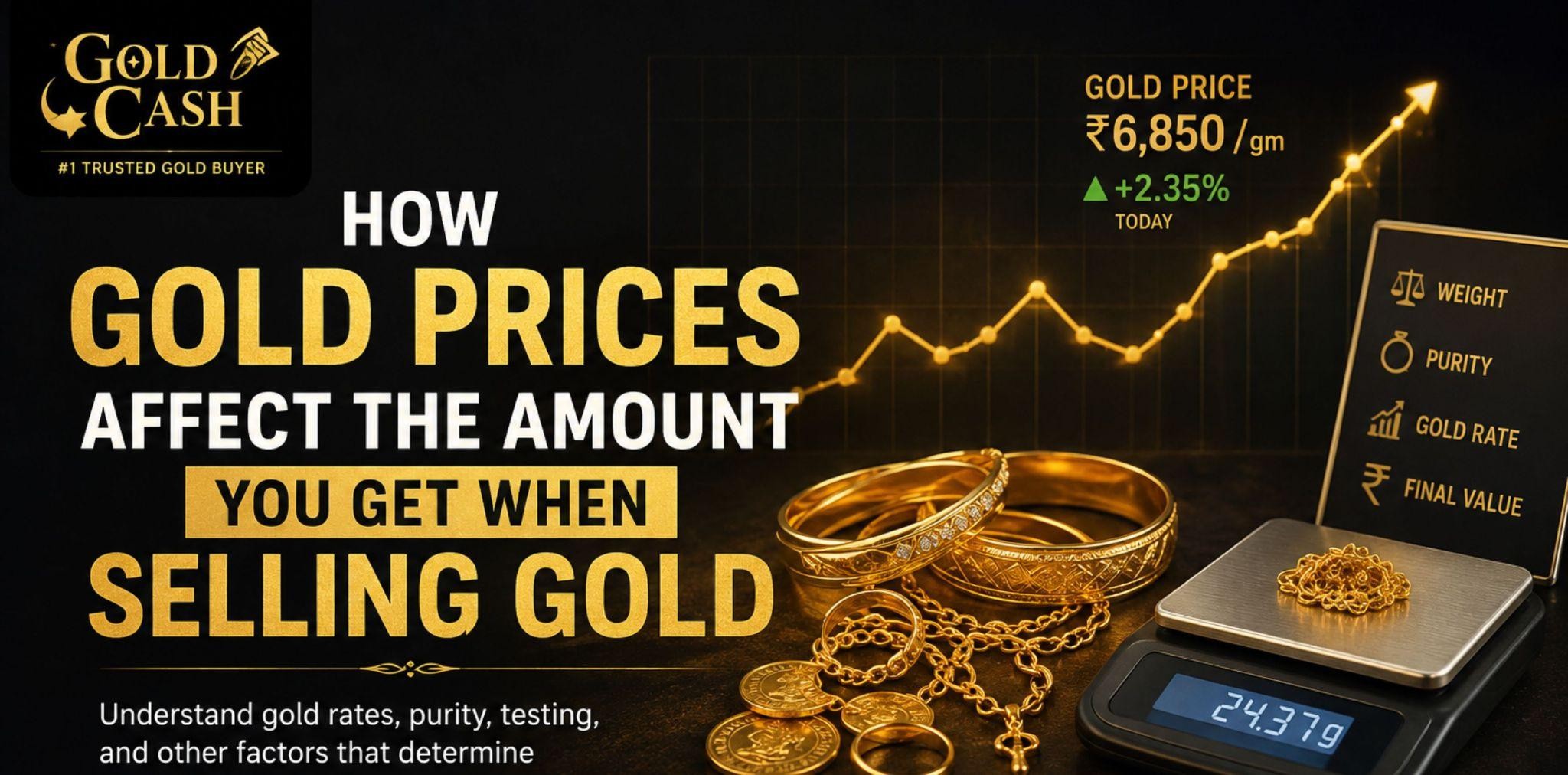
Gold prices change regularly based on market conditions. As a result, the amount you may receive when selling your gold can also change from one day to another.Understanding how gold prices influence the final valuation can help you make a more informed decision before selling.
Why Does the Gold Price Matter When Selling Gold?
Gold is generally valued according to its purity, weight, and prevailing market rate.
For example, 24K gold has a higher gold content than 22K or 18K gold. When you sell jewellery, the buyer first needs to determine how much actual gold is present in the item.
A simplified calculation looks like:
Gold Value = Gold Weight × Purity × Applicable Gold Rate
However, the final amount offered may also depend on factors such as testing results, applicable deductions, and the buyer\'s valuation process.This is why the current gold price is an important starting point, but it is not the only factor determining your final payment.
How Does a Change in Gold Prices Affect Your Gold\'s Value?
Suppose you have a piece of gold jewellery with a specific weight and purity.
If the market price of gold increases, the underlying value of the gold content generally increases as well. Conversely, if gold prices fall, its market-linked value may decrease.
For this reason, people planning to sell gold often keep an eye on current gold rates before making a decision. However, it is important to remember that the market rate shown online is not necessarily the exact amount you will receive for your jewellery.
4 Factors That Determine How Much You Get for Your Gold
1. Gold Purity
Purity is one of the most important factors in gold valuation.
Gold may commonly be available in different purities, such as:
A higher-karat item generally contains a greater proportion of gold.
A professional gold buyer will typically test the item to establish its purity before calculating its value.
2. Weight of the Gold
The weight of the item also affects its value.
If two jewellery pieces have the same purity but different weights, their gold values will naturally be different.
However, the total weight of a jewellery piece may include non-gold components such as stones or other materials. Therefore, the relevant gold weight needs to be determined during the valuation process.
3. Current Gold Rate
The prevailing gold rate provides the market basis for calculating the value of the gold content.
Since gold prices fluctuate, the valuation of the same item can vary depending on when it is sold.
This is why checking the current rate and understanding how it is being applied is important.
4. Testing and Applicable Deductions
Before purchasing gold, a buyer may test the item using appropriate methods to determine its purity and gold content.
Depending on the type of jewellery and the buyer\'s valuation policy, there may also be deductions or adjustments.
A transparent valuation process should clearly explain how the final amount has been calculated.
Does Old or Broken Gold Have Value?
Yes.
Gold does not lose its fundamental value simply because jewellery is old, damaged, broken, or no longer wanted.
Items such as:
- Old gold jewellery
- Broken chains
- Unused rings
- Gold coins
- Damaged ornaments
- Unwanted gold items
may still contain valuable gold.
What matters is the actual gold content, purity, weight, and prevailing rate, rather than whether the jewellery looks new.
Gold Jewellery Price vs Gold Selling Value
It is important to understand that the price you originally paid for jewellery and the amount you receive when selling it are not necessarily the same.
When buying jewellery, the price may include factors such as:
- Making charges
- Design value
- Taxes
- Retail margins
- Gemstones or other materials
When selling, the focus is generally on the recoverable value of the gold content rather than the original retail price.
Therefore, jewellery that was expensive when purchased may have a different resale valuation.
How to Get a Better Understanding of Your Gold\'s Value
Before selling, consider the following steps:
- Check the current gold rate: Understand the prevailing market price for the relevant purity.
- Know your jewellery\'s approximate weight: This gives you a starting point for understanding the valuation.
- Check the hallmark: Hallmark information can provide useful information about purity.
- Compare valuations: If possible, obtain valuations from reputable gold buyers.
- Ask about the calculation: A trustworthy buyer should be able to explain how the final amount was determined.
- Choose transparency over unrealistic offers: An unusually high initial quote may not always represent the final payable amount.
Selling Gold With Gold Cash Limited
Gold Cash Limited focuses on providing cash-for-gold and cash-for-silver services for customers looking to sell old, unused, broken, or unwanted precious-metal items.
The company follows a structured valuation process in which gold and silver items are assessed using appropriate testing methods. Its focus on transparent valuation and professional service has helped it serve customers across multiple Indian cities.
Gold Cash Limited has an established presence in cities including Mumbai, Delhi, Gurgaon, Hyderabad, Kolkata, Bhubaneswar, Patna, and Lucknow, giving customers access to its gold and silver selling services across several major locations.
For someone considering selling gold, understanding the valuation process is just as important as checking the current gold rate.
Final Thoughts
The current gold price can have a significant impact on how much you receive when selling gold, but it is only one part of the calculation.
Your final valuation can also depend on purity, weight, actual gold content, testing results, and applicable deductions.Rather than focusing only on the highest advertised gold rate, look for a buyer who provides a clear explanation of how your gold has been valued.
Whether you have an old necklace, a broken chain, unused jewellery, or other gold items, understanding the valuation process can help you make a more confident decision when selling.
Frequently Asked Questions
1. Does the daily gold price affect the value of my jewellery?
Yes. Gold prices fluctuate, and changes in the applicable market rate can affect the value calculated for your gold.
2. Is the gold rate the only factor that determines how much I receive?
No. Purity, weight, actual gold content, testing results, and applicable deductions can also affect the final amount.
3. Does broken gold have resale value?
Yes. Broken or damaged jewellery can still have value based on its gold content, purity, and weight.
4. Does higher-purity gold have a higher value?
Generally, yes. Higher-purity gold contains a greater proportion of gold, which can result in a higher valuation when other factors are comparable.
5. Should I check the gold price before selling?
Yes. Checking the current rate can help you understand the market and have a better idea of how the valuation is determined.
6. Is the original purchase price of my jewellery considered when selling it?
Usually, resale valuation focuses on the gold content and its applicable market value rather than the original retail price, which may have included making charges, taxes, and other costs.
7. How can I make sure my gold is valued fairly?
Choose a reputable buyer, ask about the purity-testing method, understand the applicable gold rate, and request a clear explanation of how the final valuation is calculated.