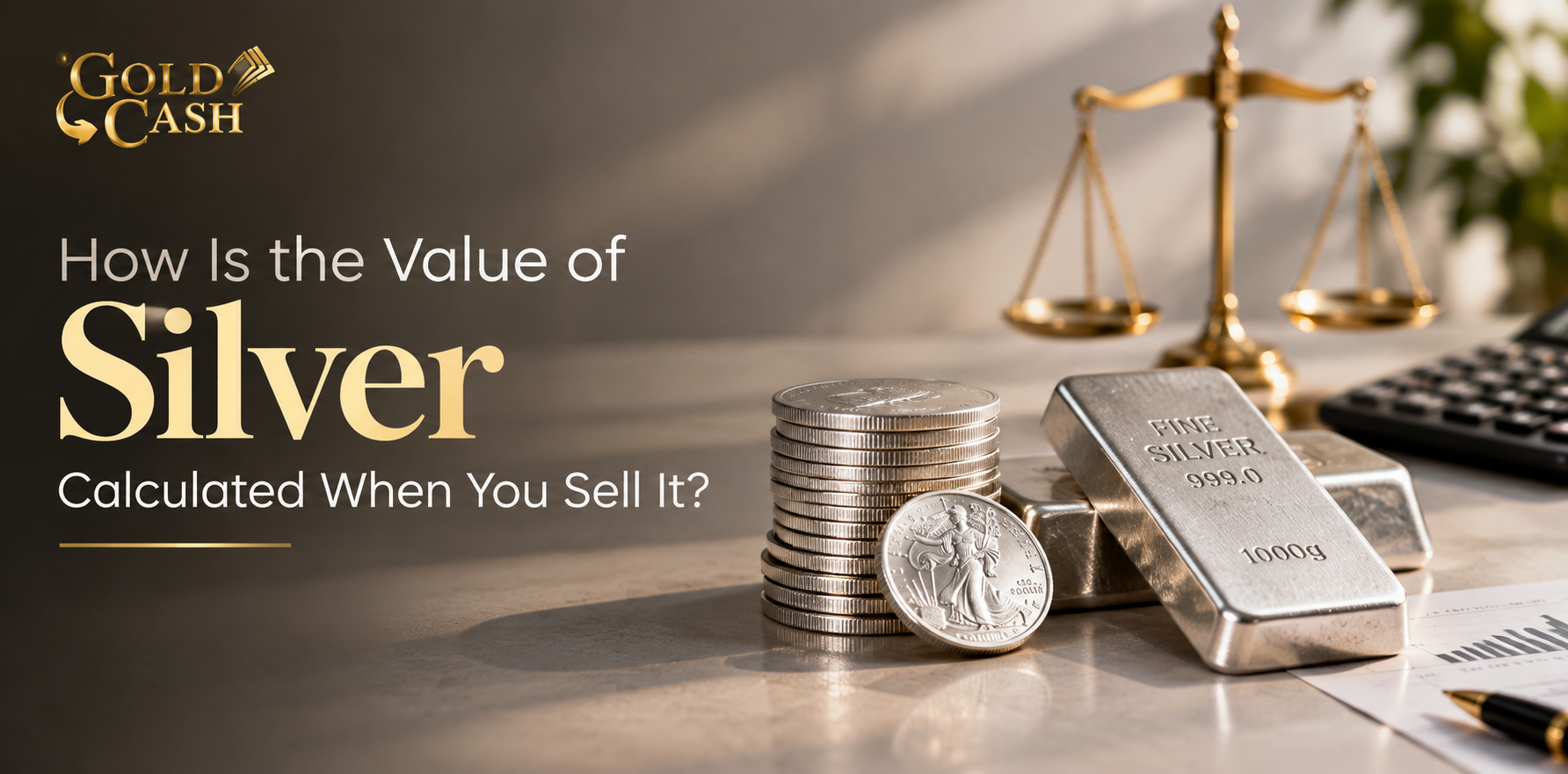
How Is the Value of Silver Calculated When You Sell It?
9 September 2026
Author: GoldCash
Selling old silver jewellery, coins, utensils, or other unused items can be a practical way to receive cash. However, many people wonder how buyers determine the value of silver and why the amount offered may differ from the price they expect.
The value of silver is not based only on its weight. Factors such as purity, current market rates, item type, and the buyer’s valuation process all play a role. Understanding these factors can help you make a more informed decision when selling silver.
What Determines the Value of Silver When You Sell It?
The value of silver is generally calculated by considering the weight of the item, its purity, and the applicable silver market rate. Buyers may also consider whether the item contains other materials or has additional value as a finished product.
This is a general explanation rather than a guaranteed payout formula. The final amount may depend on the buyer’s testing process, deductions, and the type of silver item.
How Does Silver Purity Affect Its Value?
Silver purity refers to the amount of actual silver present in an item. For example, an item marked 925 generally contains 92.5% silver, while an item marked 999 generally indicates 99.9% silver.
Higher-purity silver usually contains more actual silver by weight. However, purity should be verified rather than assumed from an item’s appearance or markings.
Common examples include:
Purity Mark
General Meaning
999
Approximately 99.9% silver
925
Approximately 92.5% silver
900
Approximately 90% silver
Unmarked
Purity needs to be assessed
Important: A hallmark or stamp can provide useful information, but professional testing may still be necessary to confirm the composition of an item.
How Is the Weight of Silver Measured?
Weight is another important factor in silver valuation. Buyers generally weigh the item to determine how much material it contains.
However, the total weight of an item may not always represent its silver content. For example, silver jewellery may include stones, beads, clasps, or other non-silver components.
Depending on the item, the buyer may need to:
Weigh the complete item.
Identify any non-silver components.
Assess the actual silver content.
Apply the relevant purity percentage.
Calculate the estimated silver value.
This is why two items with similar weights may receive different valuations.
How Do Current Silver Market Rates Affect the Price?
Silver prices change over time based on market conditions, supply and demand, and other economic factors. The rate used for valuation may therefore differ from the price you saw earlier or the amount you paid when purchasing the item.
For example, if the applicable silver rate changes, the estimated value of the same item may also change.
It is important to ask the buyer which rate is being used and whether the quoted amount is based on the current market price or another applicable rate.
Does the Type of Silver Item Matter?
Yes. The type of item can influence how its value is assessed.
Silver Jewellery
Silver rings, chains, bracelets, and other jewellery may contain stones, coatings, or additional materials. The buyer may assess the actual silver content before calculating the value.
Silver Coins
Coins may have a recognised purity and weight, making them relatively straightforward to evaluate. However, the buyer should still verify their composition and condition.
Silver Utensils
Silver utensils may vary in purity and may include mixed-metal components. Testing can help determine the actual silver content.
Broken or Unused Silver Items
Broken jewellery and other damaged silver items may still have value because the silver itself can be assessed. The condition of the item does not necessarily mean it has no resale value.
Why Is Silver Testing Important?
Testing helps buyers determine whether an item is made of silver and assess its purity. This is especially important when an item is unmarked, old, damaged, or made from mixed materials.
Professional buyers may use appropriate testing methods to evaluate the item before making an offer. The exact method depends on the item and the buyer’s equipment.
A transparent valuation process should help customers understand:
The item’s assessed purity
The weight considered for valuation
The applicable silver rate
Any relevant deductions
The final amount offered
Why Choose Gold Cash Limited for Silver Valuation?
Gold Cash Limited is an ISO 9001:2015 certified public limited company offering cash for gold and cash for silver services across India.
The company focuses on helping customers sell old, unused, broken, and unwanted precious-metal items through a straightforward valuation process. Its experienced team uses advanced testing methods to assess gold and silver items and determine their value.
With more than 20 lakh satisfied clients, Gold Cash Limited has built its reputation around fair valuation, professional service, and customer trust. The company also has a presence across cities including Mumbai, Delhi, Gurgaon, Hyderabad, Kolkata, Bhubaneswar, Patna, and Lucknow.
For customers looking to Sell silver for cash, understanding the valuation process and choosing a reliable buyer can help make the experience more transparent and convenient.
What Should You Ask Before Selling Silver?
Before accepting an offer, consider asking the buyer:
What is the assessed purity of my silver?
What weight is being used for the calculation?
Which silver rate is being applied?
Are there any deductions?
How was the final amount determined?
Is the payment process clearly explained?
These questions can help you understand the offer and compare it more confidently.
Frequently Asked Questions
1. How is the value of silver calculated?
Silver value is generally estimated using the item’s weight, purity, and the applicable silver market rate. The final offer may also depend on the buyer’s testing process and any relevant deductions.
2. Does higher-purity silver have greater value?
Generally, higher-purity silver contains more actual silver by weight. However, the final value also depends on the item’s weight and the applicable market rate.
3. Can I sell broken silver jewellery?
Yes, broken silver jewellery may still have value. The buyer can assess its silver content and determine an offer based on the applicable valuation factors.
4. Why is my silver item worth less than its purchase price?
The purchase price may include manufacturing charges, making charges, retail margins, and other costs. When selling, the valuation may primarily focus on the actual silver content and applicable market rate.
5. How can I get a fair valuation for my silver?
Choose a reliable buyer, ask about the testing process, and understand the purity, weight, rate, and deductions used to calculate the offer.
6. Does the condition of silver affect its value?
The condition may influence how the item is assessed, especially if it contains other materials or has a special resale value. However, the actual silver content remains an important factor in valuation.
Conclusion
The value of silver when you sell it depends mainly on purity, weight, and the applicable silver market rate. Understanding these factors can help you make informed decisions and avoid confusion during the selling process.
Whether you have old jewellery, coins, utensils, or broken silver items, a transparent valuation process can make selling more convenient. Gold Cash Limited offers professional silver valuation services designed to help customers understand the value of their items and receive payment through a straightforward process.
Register yourself withGold Cash and earn Rs. 1000/-.
DOWNLOAD
India's most trusted Gold Cash APP
Trusted by over 20 Lakh customers, for best deals in Gold.